

Production Rework Tracking: The Records Nobody Keeps
A 99 percent yield means ten reworked boards per thousand shipped as new. Why untracked rework is the biggest blind spot in electronics manufacturing.
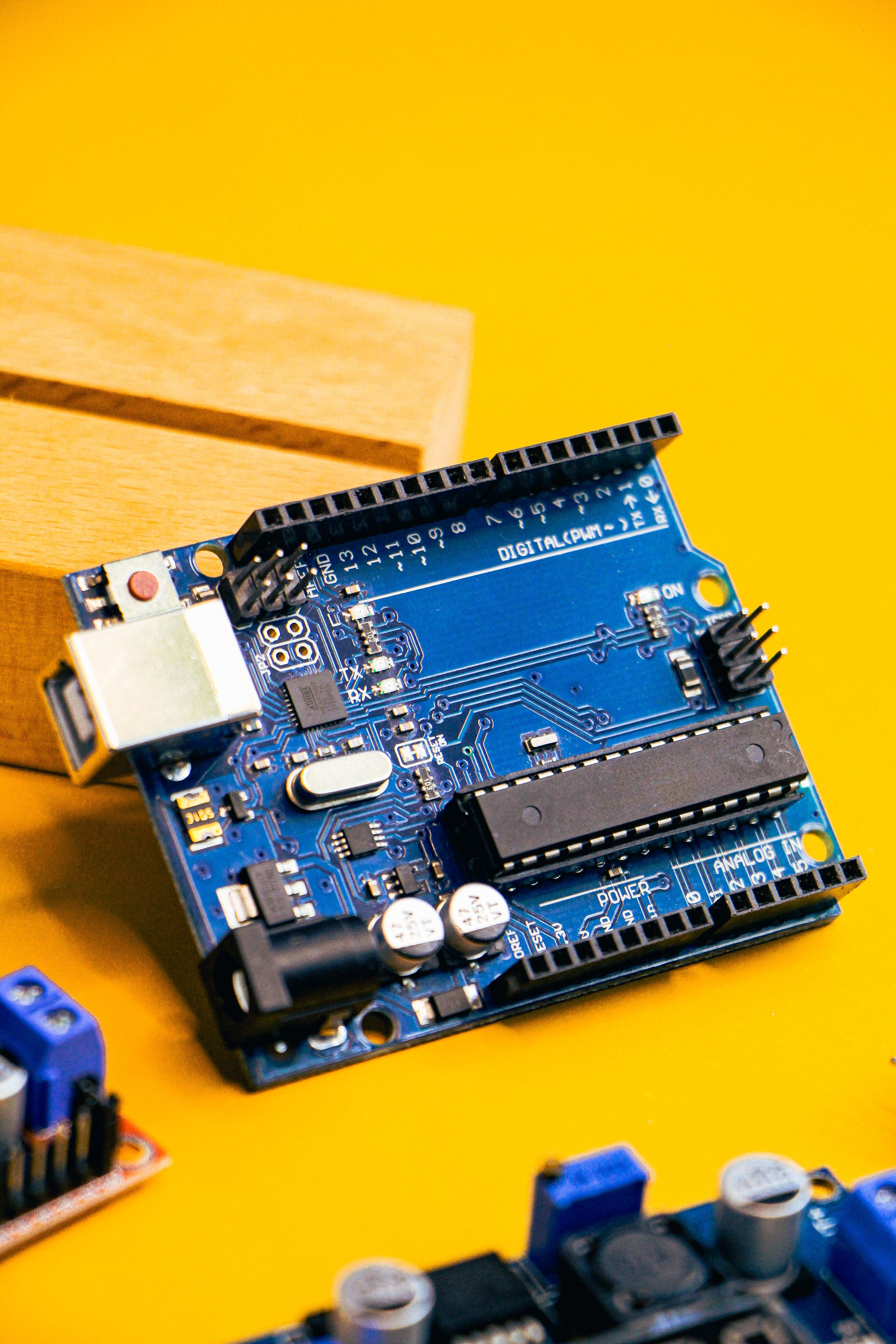
Production rework tracking is the practice of recording every unit that failed a test, what failed, what was done to recover it, and who did it, against that unit's serial number. It matters because reworked units ship as new units. Without the record, a board that was desoldered and repaired at the factory is indistinguishable from one that passed first time, right up until it fails in the field.
Ask your production team one question
What is your first pass yield?
If the answer is "around 99 percent", do the arithmetic out loud. On a thousand-unit build, ten boards did not pass. Those ten boards did not go in the bin. Somebody found the fault, reworked the joint, replaced the component, retested and passed them. Then they were packed alongside the other 990 and shipped.
That is normal. Rework is a legitimate and necessary part of electronics manufacturing. Nobody scraps a board over one cold solder joint.
The problem is not the rework. The problem is that in most factories, the record of it stops at a tally mark on a whiteboard. The unit itself carries no history. And a hand-reworked joint carries a genuinely different risk profile from a reflowed one, particularly under vibration, thermal cycling and humidity, which is exactly what field deployment supplies.
What untracked rework costs you eighteen months later
The cost arrives as a field failure investigation with no data.
A customer returns forty units with the same symptom. You need to know whether this is a design problem affecting the whole population, a component lot problem affecting one batch, or a workmanship problem affecting a handful of reworked boards. Those three answers lead to three completely different responses: a redesign, a supplier claim, or a targeted recall of a known subset.
Without rework records, you cannot distinguish between them. So you do the expensive thing. You assume the worst case, treat it as a design issue, and either redesign or extend warranty coverage across the whole fleet. Teams routinely spend six figures on this because a ten-second record was never captured.
There is a second cost that is less visible. Repeat rework. If a station reworks the same reference designator on eight percent of boards and nobody aggregates that, you have a design for manufacturability problem that stays invisible for the life of the product. The data to find it exists at every station. It is just never collected.
What a rework record needs to contain
A useful record is short. Six fields is enough.
- Serial number. Which physical unit.
- Test that failed. Which step, with the measured value, not just the verdict.
- Diagnosis. What was actually found. Open joint, wrong part, damaged pad, missing component.
- Action taken. What was done. Reflowed, replaced with part number X, added a wire link, replaced the module.
- Operator and station. Who and where.
- Retest result. The full test sequence rerun, with values, not just the failing step.
That last point matters. A common shortcut is to rework the fault and retest only the step that failed. Rework introduces thermal and mechanical stress to nearby components, so a partial retest is how a repaired board leaves the factory with a new, undetected defect.
Rework data becomes useful the moment you aggregate it
Individually, a rework record is a note. In aggregate, it is a manufacturing dashboard nobody else has.
- Rework rate by reference designator tells you which part of your design is hard to build. That is a DFM input, not a production problem.
- Rework rate by station and operator separates process problems from people problems.
- Rework rate by component lot finds supplier issues before they reach volume.
- Rework rate over time within a build shows fixture wear, stencil degradation and paste problems.
- Field failure rate of reworked units versus first-pass units is the number that tells you whether your rework process is actually sound. Very few companies can calculate it. It is one of the most valuable quality metrics in hardware.
How S3Suite records rework
The Manufacturing Suite treats rework as part of the unit's permanent history rather than an exception log.
- Every unit has a build history keyed to its serial number, including each test attempt, the measured values, failures, rework actions and retests.
- Rework entries are structured, so they can be aggregated by designator, station, operator, lot and variant rather than read one at a time.
- Yield and first pass yield are calculated from the records, not reported manually, which removes the incentive to round upward.
- The history is visible from the Operations Suite. When a unit arrives as an RMA, its production record including any rework appears next to the field fault, so the first question of every investigation is already answered.
- Ask Square AI can query across the record, so "were the failing units disproportionately reworked at production" is a question rather than a data project.
The rule that makes this work
If a unit is touched after its first test pass, that touch gets recorded against its serial number.
That is the whole policy. It costs an operator about fifteen seconds. It survives staff turnover, it survives changing contract manufacturers, and it is the difference between a root cause analysis that takes an afternoon and one that takes a quarter and ends in a guess.
Most companies introduce this after their first expensive field failure. There is no reason it has to be in that order.
FAQ
What is production rework in electronics manufacturing?
Any repair or correction performed on an assembled board after it fails a production test, such as reflowing a joint, replacing a component or correcting an assembly error, in order to recover the unit rather than scrap it.
What is a normal first pass yield for PCB assembly?
It varies widely with complexity, but mature builds commonly sit between 95 and 99.5 percent. The important figure is not the number itself but whether the failures behind it are recorded and analysed.
Why does rework need to be traceable?
Because reworked units ship as new units and carry a different risk profile. Without a serial-level record you cannot tell, during a field failure investigation, whether you are looking at a design issue, a supplier issue or a workmanship issue.
Should reworked units be fully retested?
Yes. Rework applies localised heat and mechanical stress that can damage adjacent components, so the complete test sequence should be rerun rather than only the step that originally failed.
How does rework tracking connect to RMA analysis?
When a returned unit's production history including rework is visible alongside its field fault, root cause analysis starts with evidence. Without it, the investigation begins by trying to reconstruct what happened on a factory floor month or years earlier.
CTA: Every unit should carry its own build history. See how S3Suite records test results, rework and yield against each serial number.